Monday, January 30, 2012

Cadillac CTS-V

Cadillac CTS-V

Cadillac CTS-V
As the new CTS sport sedan earns accolades and new owners, Cadillac takes the next leap forward by premiering the 2009 Cadillac CTS-V, the brand's ultimate expression of performance and luxury.

Launching in the fourth quarter of 2008, the all-new Cadillac CTS-V intends to combine the serious performance of an elite sports car with the poise and elegance of a prestigious luxury sedan. Part of Cadillac's acclaimed V-Series of high-performance models, CTS-V delivers an estimated 550 horsepower (410 kW). More than just power, CTS-V also includes a comprehensive suite of technical and design enhancements, including Magnetic Ride Control, an industry-first Performance Traction Management program and the addition of a new automatic transmission with paddle-shift control.

"The CTS-V represents the full extension of our design, technology and performance capabilities," says Jim Taylor, Cadillac general manager. "The V-Series takes the award-winning CTS sport sedan and elevates it to a position within the club of the world's most exclusive and capable cars."

As an all-new version of the CTS sport sedan was prepared for 2008, Cadillac engineers and designers began to scheme a new CTS-V that would reach much higher in terms of performance and luxury. Through the original CTS-V, Cadillac proved it could develop a very potent, high-performance sedan. The challenge for the 2009 model was enhancing every aspect in a comprehensive manner, along with reaching higher performance limits.


2009 Cadillac CTS-V
Several key technical and design elements combine to transform the already highly capable CTS into the new V-Series. Like the existing CTS, the V-Series is the product of an intensive development process across North America and Europe, including famed test tracks and millions of miles of road. Supporting Cadillac's ongoing global expansion, the 2009 Cadillac CTS-V is planned to be offered outside North America for the first time, including exports to Europe, the Middle East and Asia.

Sophisticated technical enhancements

The 2009 Cadillac CTS-V features the world's fastest-reacting suspension technology, Magnetic Ride Control (MRC). It uses shocks controlled by electro-magnets, rather than mechanical valves, greatly accelerating response time. Electronic sensors at all four wheels literally "read the road" every millisecond, making constant adjustments to damping to create virtually instantaneous and extremely precise control of body motions. This is of particular benefit for a high-performance sedan, helping to keep the car very composed during hard cornering, acceleration, braking and other dynamic maneuvers.

MRC technology first appeared on the Cadillac STS performance sedan and has been used on some of the world's most celebrated cars, including the Chevrolet Corvette and a select few European sports cars.

Enabling the precise control expected in a high-performance sedan, the CTS-V features Performance Traction Management system, borrowed from championship racing teams. This technology uses advanced electronics to manage engine torque for optimal traction during acceleration. In situations such as acceleration from a stop or exiting corners, Performance Traction Management regulates torque delivery for the best possible launch.

Performance Traction Management uses the same sort of electronics as stability control programs such as Cadillac's StabiliTrak system, but applies it in a different manner. Rather than monitoring and controlling wheel slip to assist in stopping or slowing the car, PTM regulates torque delivery to instantly match the available tire grip for maximum acceleration.

CTS-V also includes sophisticated braking and tire systems, in partnership with two companies renown for high-performance technology: Brembo and Michelin. Brembo brakes are at all four corners and include powerful, six-piston calipers in the front and four-piston calipers in the rear. Michelin worked with Cadillac engineers to develop its acclaimed Pilot Sport 2 (PS2) summer tire for Cadillac CTS-V and its 19-inch wheels.

And, of course, there is the matter of power. It has increased nearly 35 percent for the '09 CTS-V, via a new 6.2L LSA supercharged V-8 engine generating an estimated 550 hp (410 kW) and 550 lb.-ft. (745 Nm) of torque. The engine delivers this power with remarkable refinement. A sixth-generation Eaton supercharger minimizes the added noise previously associated with supercharged engines, and tightly controls intake air temperature for optimal performance.

Transmission choices include either a six-speed manual or an exclusive, six-speed automatic with steering-wheel-mounted paddle shifters. It is the first automatic offered on the CTS-V.

Accentuated design elements

The 2009 CTS-V extends Cadillac's acclaimed design language, both inside and out. The V-Series includes all the elements of the CTS sport sedan's well received cabin, while adding some elegant and purposeful accents.

V-Series will offer Recaro performance driving seats, providing excellent support for spirited driving and adding to the luxurious and purposeful interior. These new, 14-way adjustable performance seats include pneumatic bolster controls in the seat cushion and backrest.

A microfiber material is added to the steering wheel, seats and shifter, providing the soft feel and luxurious appearance of suede without suede's inherent drawbacks of difficult care and moisture sensitivity. These accents on the steering wheel, seat inserts and shifter are elegant to the touch and help support high-performance driving.

The car's integrated center stack is trimmed with a new Obsidian material that is also applied to the center console and door trim. Just like every CTS, the V-Series includes a hand-stitched instrument panel, door trim and center console. Leading-edge infotainment features, including a 40-gigabyte hard drive, advanced navigation system with a "pop-up" screen and Bose digital surround audio, extend to the V-Series, as well as factory-installed Bluetooth capability.

The exterior of the new Cadillac CTS-V amplifies the assertive stance and elegant details of the standard car, and communicates the car's remarkable capabilities. The dihedral Cadillac grille is larger to enable more air intake and features a satin finish. The raised hood encompasses the supercharged engine, and new front and rear fascias identify the vehicle as a V-Series. The car's 19-inch wheels enhance its stance on the road.

The founding member of the V-Series, Cadillac CTS-V was initially offered in 2004 and sold primarily in North America through the 2007 model year. The supercharged STS-V and XLR-V were added in 2006 to make the V-Series an exclusive trio of models all capable of zero-to-60 acceleration in less than five seconds with enhanced overall performance and luxury features.

2009 CADILLAC CTS-V: PRELIMINARY SPECIFICATIONS

Engine

Type: 6.2L supercharged V-8 (LSA)
Displacement (cu in / cc): 376 / 6162
Bore & stroke (in / mm): 4.06 / 103.25 x 3.62 / 92 mm
Block material: cast aluminum
Cylinder head material: cast aluminum
Valvetrain: overhead valve, 2 valves per cylinder; 0.492-in (12.5 mm) lift
Supercharger: Gen. 6 R19 with single brick intercooler; 1.9L displacement w/4-lobe rotor design
Fuel delivery: SFI; center feed
Ignition: direct-mount ignition coils; extended-life dual platinum-tipped spark plugs
Compression ratio: 9.0:1
Horsepower (hp / kW @ rpm): 550 / 410 @ 6200 (est)
Torque (lb-ft / Nm @ rpm): 550 / 745 @ 6200 (est)
Recommended fuel: premium recommended but not required
Chassis & Suspension

Front suspension: independent SLA; 29-mm hollow stabilizer bar; elastomeric handling and ride bushings; 65-N/mm spring rate; Magnetic Ride Control with electro-magnetically controlled shocks
Rear suspension: independent SLA; 24-mm solid stabilizer bar; elastomeric trailing arm bushing; 90-N/mm spring rate; Magnetic Ride Control with electro-magnetically controlled shocks
Wheels
19 x 9-inch; forged alloy, 5-lug (front)
19 x 9.5-inch, forged alloy, 5-lug (rear)
Tires
255/40R19 Michelin PS2; summer Z-rated (front)
285/35R19 Michelin PS2; summer Z-rated (rear)
Brakes: four-wheel disc with four-channel ABS, hydraulic brake assist and dynamic rear brake proportioning
Steering ratio: 16.1:1
Turn radius (ft / m): 37.9 / 11.55
Dimensions

Wheelbase (in / mm): 113.4 / 2880
Overall length (in / mm): 191.6 / 4866
Overall width (in / mm): 72.5 / 1842
Overall height (in / mm): 58.0 / 1472
Track (in / mm):
front: 61.8 / 1570
rear: 62.0 / 1575
Curb weight (lb / kg):
manual: 4200 / 1905 (est)
automatic: 4300 / 1950 (est)
Weight distribution (% front / rear): 54 / 46
Approach Angle (deg): 10.4
Departure Angle (deg): 18.3
Tumblehome (deg): 24.6

Sunday, January 29, 2012

FPV BF MkII Super Pursuit

FPV BF MkII Super Pursuit

FPV BF MkII Super Pursuit

Ford Performance Vehicles has increased the visual presence of its vehicles with the new BF model range, introducing a bold new styling theme that provides greater distinction between Boss 290 V8-powered and F6 270 Turbo-powered vehicles.

New-look front bumpers on all models feature an aggressive race-inspired lip surrounding the larger lower air intake, which is replicated in a similar fashion surrounding a new-look opening in the rear bumpers of all sedans. This is combined with stylish new-design auxiliary driving lights.

The unique styling theme provides FPV with greater exclusivity as well as the flexibility to customise the design for individual models.

To complement the new styling, all Boss 290-powered vehicles receive 19-inch alloy wheels as standard fitment, including a new design on the range-topping GT-P and Super Pursuit models, while the GT and GT-P are also fitted with a traditional muscle car-inspired twin exhaust system. All Boss 290-powered models also feature a broader selection of new-design optional side stripe and hood decal packages.

"Our customers loved the race-inspired styling of the BA GT and the technical detail we applied to give the F6 Typhoon and F6 Tornado a unique look," said David Flint, Managing Director of Ford Performance Vehicles.

"With the new BF models, we have taken the opportunity to give our vehicles even greater road presence and, at the same time, create distinct visual differences between our Boss 290 V8 models and F6 variants."
FPV BF MkII Super Pursuit (2006)
2006 FPV BF MkII Super Pursuit

EXTERIOR STYLING

The new-look BF range from FPV builds on the success of its predecessors with an evolutionary step forward in design.

The new-look front bumpers further enhance the traditional performance car styling of the Boss 290 V8-powered vehicles with a larger and more pronounced lower air intake featuring the race-inspired three-slot spoiler.

Introducing an element of classic styling alongside the aggressive design are new-look fog lamps. These lights feature a satin alloy surround on GT and Pursuit with black integrated flutes, while GT-P and Super Pursuit build on the premium theme of the range-topping models with satin alloy surrounds and flutes that complement the standard satin alloy grille mesh.

Both the GT and GT-P now feature their respective model's badges in the upper air intake within the front bumper: a design cue reminiscent of the classic GTs of the 1960s and 1970s.

The F6 Typhoon and F6 Tornado also carry the aggressive new look, but with a unique lower air intake design that features reverse angle pillars to accentuate the silver intercooler behind the Technik grille mesh. Both the F6 Typhoon and F6 Tornado feature exclusive design auxiliary driving lights with colour coded inserts. These styling elements give a dramatically different look to the F6 models compared to GT, GT-P, Pursuit and Super Pursuit.

The pronounced intake surround continues through to the rear bumpers on all sedan variants with a signature three-slot extraction design. The grille mesh in each model also replicates the front bumper: black in GT, satin alloy in GT-P and silver in F6 Typhoon.

Sonar-activated reverse-parking sensors are now fitted as standard equipment in the flagship GT-P and available as an option for the first time on GT and F6 Typhoon with an RRP of $650.

All FPV sedans gain the new jewel-effect tail lights introduced across all Falcon models in the BF range.

Enhancing the more aggressive styling, all FPV Boss 290 V8-powered models are now fitted with 19-inch alloy wheels as standard equipment. The BF GT and Pursuit come with the five-spoke alloy wheel previously available exclusively on BA GT-P and Super Pursuit, while the flagship variants receive a new-design five-spoke alloy wheel with a raised spine in the centre of each spoke and a machined outer rim.

The wheels have been designed to accentuate the power and presence of the Brembo brakes that are now standard on all FPV models.

The double five-spoke alloy wheel with gun metal shadow rims on the F6 Typhoon and F6 Tornado are carried through with the new BF model. However, a unique 19-inch alloy will be available as an option on F6 models with an exclusive gun metal shadow design and machined outer rim. This option has a RRP of $2400.

FPV has introduced a new-design lockable hard tonneau cover for its Ute range with an aggressive power bulge in the centre that continues the muscular performance characteristics generated by the bonnet bulge in the Pursuit and Super Pursuit. This hard tonneau cover is standard equipment on the flagship Super Pursuit and available as an option on the Pursuit and F6 Tornado with a recommended retail price of $2710.

Providing its customers with an even wider range of options to personalise their vehicle, a new three-piece hard tonneau cover with integrated alloy sports bar is available for the first time. This option has a recommended retail price of $1050 in lieu of the standard hard tonneau cover on the flagship Super Pursuit and available as a stand alone option on the F6 Tornado and Pursuit with a recommended retail price of $3750.

FPV owners will be offered even more ways to customise their vehicle, with a new-design side stripe and hood decal package available as an option on GT, GT-P, Pursuit and Super Pursuit.

The new-look stripes feature a solid middle stripe with a smaller key-line stripe on either side that also wraps around on the rear bumper section, providing a more dynamic look. The design of the Boss 290 hood decal fitted to the sides of the bonnet bulge remain as it was introduced on the BA MkII models.

A wider selection of stripe colour and exterior colour choices have been introduced with the BF range, including new gold stripes. The stripe package is a no-cost option on GT-P and Super Pursuit and has a recommended retail price of $595 as an option on GT and Pursuit. The Boss 290 Hood Decal can be fitted without the stripe package and has an RRP of $195.

The new stripes coincide with the introduction of a number of exclusive performance hero colours: Bionic, Toxic and DeJaVu.

Bionic is a bold new non-metallic blue inspired by the iconic True Blue that was popular on XY GT Falcons while Toxic is a bright acidic green - similar to Citric Acid that was popular in the original BA series - and is close to the Lime Glaze colour that was available on XA GT Falcons. DeJaVu, which is due to begin production in December, is a new dark metallic green.

INTERIOR UPGRADES

The feature-filled cabin in all FPV models has received a number of improvements with the introduction of the new BF range.

Complementing the satin alloy interior features such as the Interior Command Centre and gear lever surrounds, the door trims now carry the same premium highlight on the grab handles with a soft-feel material. The performance seats in all models now feature Satin Alloy contrast stitching with the FPV logo embroidered in the headrests.

A luxury interior pack is available as an option on the F6 Tornado Ute for the first time, incorporating dual zone climate control with large TFT colour screen Interior Command Centre and Premium sound with a six-disc in-dash CD player. This option has a recommended retail price of $1500.

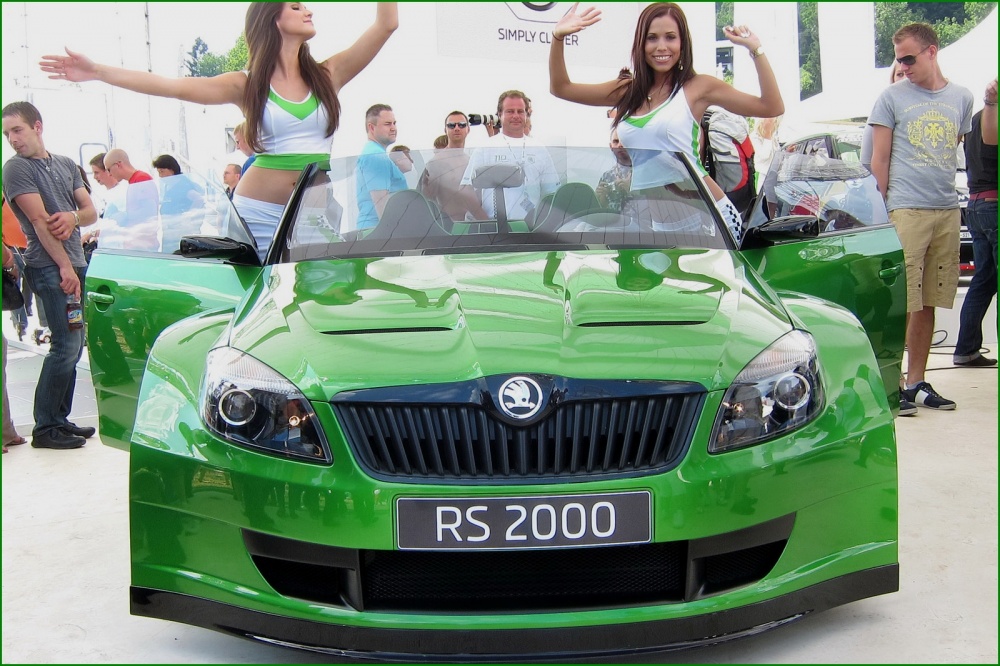
pics of Skoda RS 2000 car


Bugatti Veyron

Bugatti Veyron

Bugatti Veyron
Following its presentation at the end of the previous year, the new Bugatti Veyron 16.4 super sports car has set off a wave of exceptionally positive reactions from customers. The orders received up to now have already covered the production planned for 2006.

At its various public appearances, the Bugatti Veyron 16.4 has caused a sensation in all important markets and has convinced customers from the Far East, the Middle East, the United States, and of course Europe with its unrivalled capabilities. In setting up a worldwide customer service and support network, Bugatti's related services have top priority. As of now, Bugatti has over twenty "Authorized Bugatti Partners for Sales and Service", their number and geographical locations having been defined by the priority allotted to the respective markets.

It is therefore no wonder that the United States, without a doubt the most important market for the Bugatti Veyron 16.4, heads the list of Bugatti's contact points. Coming in after the United States are the most important European markets, Germany, Great Britain, Switzerland and France. The company's headquarters are located in Molsheim, France.

In Japan, a country which is also one of the leading buyers of luxury vehicles, customers receive support in Tokyo. At present Bugatti sales and service centres in Dubai and Doha are responsible for customers in Arabian countries. In the near future, Bugatti partners will also feature in other potential markets, for instance in China. The company's policy, however, is that Bugatti Automobiles S.A.S. does not supply vehicles to countries where customers do not have access to official support.

The Bugatti Veyron 16.4 has more than justified its period of development by bringing forth a perfect product. This fascinating super sports car, outstanding in every respect, is a prototype for state-of-the-art technology and for the potentials of automobile manufacturing - a true giant on the market. After 50 years, Bugattis are once again rolling out of Molsheim - Ettore Bugatti, the creator of this legendary marque, would be proud indeed!

Technical Specifications

Drive Train
Motor type / Number of cylinders: W16
Cylinder capacity: 7,993 cm
Power output: 736 KW (1,001 hp) at 6,000 rpm
Max. torque: 1,250 Nm from 2,200 - 5,500 rpm
Gearbox: 7 Gear DSG
Drive: All wheels

Performance
Top speed: 407 km/h
Acceleration:
+ 2.5 sec 0-100 km/h
+ 7.3 sec 0-200 km/h
+ 16.7 sec 0-300 km/h
Braking distance: 31.4 m 100-0 km/h
Gearbox shift time: < 150 ms

General
Length: 4,462 mm
Width: 1,998 mm
Height, normal position: 1,204 mm
Wheel base: 2,710 mm
Curb weight: 1,888 kg
Max. permitted laden weight: 2,200 kg
Tank capacity: 100 l

Tyres
Tyres, front: 265-680 ZR 500A (99Y) PAX System
Tyres, rear: 365-710 ZR 540A (108Y) PAX System

Fuel Consumption
In town: 40.4 l
Out of town: 14.7 l
Combined: 24.1 l

Saturday, January 28, 2012

BMW X6

BMW X6

BMW X6
The BMW X6 is the world's first ever Sports Activity Coupé, still a unique combination of sporty dynamics and supreme versatility and with further enhanced appeal from spring 2012. Selective modifications in design and innovative equipment features hone the profile of the new BMW X6 as a distinctive model within the premium segment of all-wheel-drive automobiles. Its exceptional standing and ongoing popularity is due to both its highly expressive design, combing the athletic and elegant lines of a coupé with the supremacy of a BMW X model, and the fascinating driving experience provided by powerful petrol and diesel engines fitted with BMW TwinPower Turbo Technology and the intelligent all-wheel-drive system xDrive, including Dynamic Performance Control.

Since its market launch, more than 150,000 of the Sporty Activity Coupé were sold within approximately three years. This far exceeded the original plans. And the continuing high level of demand for the BMW X6 on the worldwide automobile markets is impressive confirmation of the unusual vehicle concept of the Sports Activity Coupé.

Striking accentuations at the front and rear, adaptive LED headlamps as a fnew option

Precisely modified details in the front view give the new BMW X6 an appearance characterised by exclusive athleticism and supremacy. The standard fog lights are now set in matt finish surrounds in the upper area of the outer air inlets. Their higher and more lateral position emphasises the width of the vehicle. The striking three-dimensional modelling of the frame and newly designed bars, angled in the lower section, make the BMW kidney grille stand out especially conspicuously within the vehicle front section. The angle of the grille bars is flush with the bottom of the headlamp units, thereby creating an additional horizontal line which likewise highlights the wide track and stable road-holding of the new BMW X6.


2013 BMW X6
As an alternative to the standard bi-xenon light, the new BMW X6 is the first vehicle in its segment to be fitted optionally with adaptive LED headlamps. Their bright white light ensures optimum visibility, while their high-quality appearance represents a new interpretation of the brand's hallmark twin circular headlamps. The three-dimensionally shaped luminous rings of the adaptive LED headlamps are strikingly levelled off both at the top and bottom and are overlaid at the upper edge by an LED-fed accent light. The light sources for low and high beam light are LED units positioned on a horizontal bar at its centre, feeding their light into the reflectors in front. In the new BMW X6 M, adaptive LED headlights are fitted as standard.

With its newly designed rear lights with LED technology, the powerfully shaped rear section of the new BMW X6 also features more intense styling. The rear lights are now two LED-fed light banks which create the brand's hallmark night design as a harmoniously glowing light mass. The fact that they are horizontally aligned and stretch far out to the sides emphasises both the width of the vehicle and the flowing transition between the side section and rear.

Attractive supplements to the program of external paint finishes, light alloy wheel and leather trim

The program of external paint finishes for the new BMW X6 consists of two non-metallic and eight metallic colours, including Marrakech Brown metallic, Orion Silver metallic and Midnight Blue metallic. The standard equipment range of the new BMW X6 also includes 19-inch light alloy wheels. In the 8-cylinder model BMW X6 xDrive 50i these now feature a new double spoke design in bi-colour. The selection of light alloy wheels available as an option is supplemented with a 20-inch version in Y-spoke, bi-colour design. An optional feature for the BMW X6 is an engine compartment lid with strikingly shaped powerdome which additionally highlights the powerful appearance of the Sports Activity Coupé (not available in Germany).

The standard leather trim Nevada is now also available in the colour Vermilion Red. The exclusive nappa leather option with extended features now includes a choice between the colours Black and Ebony White. The new BMW X6 is offered as standard as a four-seater model. A three-seater rear bench is optionally available. The luggage compartment volume of the Sports Activity Coupé is 570 litres and can be extended to up to 1,450 litres by folding down the rear backrests.

As an additional option, the M Sport Edition is offered for the new BMW X6 in Germany. This attractive equipment package includes 20-inch M light alloy wheels in double spoke design and bi-colour finish with mixed tyres, adaptive LED headlamps, BMW Individual high-gloss Shadow Line, black surrounds for the fog lights and M door sill cover strips. The striking accentuations for the exterior are supplemented with a sporty interior ambience. Features here include the sports seats with electrical adjustment and memory function, M-specific Alcantara/Nappa leather combination in black with M-style welt and contrast stitching, M leather steering wheel with shift paddles, M driver footrest, stainless steel pedals, interior strips in Aluminium Flywheel black and the BMW Individual roof liner in anthracite.

The new BMW X6: dynamic, supreme, efficient, innovative

With the market launch of the new BMW X6, the combination of supreme appearance, agile driving properties and hallmark brand efficiency so characteristic of the Sports Activity Coupé is raised to a new level. The petrol and diesel engines with BMW TwinPower Turbo Technology available for the BMW X6 deliver impressive pulling power and exemplary low fuel consumption figures. The V8 engine of the BMW X6 xDrive50i delivers 300 kW/407 bhp, while in the BMW X6 xDrive35i an in-line 6-cylinder petrol engine with 225 kW/306 bhp ensures supreme athletic performance. The in-line 6-cylinder diesel engines of the models BMW X6 xDrive40d and BMW X6 xDrive30d mobilise 225 kW/306 bhp and 180 kW/245 bhp respectively. Both offer not only impressively sporty power delivery but also emission figures based on the EU test cycle of 7.5 litres per 100 kilometres for the BMW X6 xDrive40d and 7.4 litres for the BMW X6 xDrive30d.

For further reduction of nitrogen oxide (NOx) in the exhaust gas, the BMW X6 xDrive30d can also be fitted with optional BMW BluePerformance Technology as of spring 2012. Here, in addition to the standard components of diesel particulate filter and oxidation catalytic converter, the AdBlue system is used, with urea injection and an NOX catalyst storage which eliminates sulphur dioxide as well as nitrogen oxides. This means that the vehicle already meets the requirements for the EU6 emission standard which comes into effect from 2014.

An additional model version based on the new BMW X6 also lines up for the start at the same as the market launch of the latter. The BMW M Performance Automobile BMW X6 M50d sets a new benchmark for pulling power and efficiency with a newly developed 280 kW/381 bhp in-line 6-cylinder diesel engine. Its unique triple turbocharging gives the world's most powerful standard in-line 6-cylinder diesel engine a thrust which sets in early on and is maintained right through to the high engine speed range. Its maximum torque is 740 Newton metres. One of the factors contributing to its exceptional efficiency - especially in relation to its output - is the new version of the common rail direct injection, whose piezo injectors apply a maximum pressure of 2,200 bar. With an acceleration rate of 5.3 seconds for the sprint from zero to 100 km/h, the BMW X6 M50d even outdoes 8-cylinder models, while its average fuel consumption in the EU test cycle is still only 7.7 litres per 100 kilometres. Its drivetrain, suspension technology and aerodynamic properties have been harmonised with the precision so characteristic of M.

As an additional product offer from BMW M GmbH, the specialists for high-performance sports cars, the BMW X6 M with its V8 engine delivering 408 kW/555 bhp also benefits from detailed refinements in the area of design and equipment. The BMW X6 M is fitted with a 6-speed M Sport automatic transmission, also highlighting its individual status with such features as separately developed suspension technology.

In all other models, engine power is transferred by means of a standard 8-speed sports transmission including shift paddles at the steering wheel. Dynamic Performance Control is a standard feature in all versions of the BMW X6 as an element of the intelligent all-wheel drive system xDrive. This gives greater precision to the electronically controlled power distribution so as to optimise driving stability, traction and dynamic performance. It particularly comes to bear when taking bends in sporty style. Even as the car enters the bend, xDrive feeds additional power to the rear wheels so as to support an agile turn-in response. By means of continuously variable distribution of drive torque between the rear wheels, Dynamic Performance Control also optimises tracking stability under high transverse acceleration forces as well as traction when accelerating out of a bend. For additional enhancement of agility and supremacy, the systems Active Steering (not available for the BMW X6 M50d and the BMW X6 M) and Adaptive Drive (as standard in the BMW X6 M50d and the BMW X6 M) are offered with electronically controlled dampers and roll stabilisation.

The progressive character of the new BMW X6 is also underscored by the extensive range of driver assistance systems and mobility services from BMW ConnectedDrive. In addition to BMW Head-Up-Display, features available for the Sports Activity Coupé include the systems Lane Departure Warning (not for the BMW X6 M50d and the BMW X6 M), Speed Limit Info, Side View and Rear View camera with Top View. The new BMW X6 is also optimised by means of intelligent networking with the integration of smartphones and music players in the vehicle and the use of innovative infotainment functions.

BMW 135i Coupe

BMW 135i Coupe

BMW 135i Coupe
BMW introduced a modern and authentic performance coupe that draws inspiration from its iconic BMW 2002 models of some 40 years ago. The next BMW legend, the 1-Series Coupe, represents the core BMW philosophies of pure performance and premium design. By combining sporty rear-wheel-drive dynamics, agile handling, powerful engines and seating for four, the BMW 1-Series Coupe will reinvent the niche that the legendary BMW 2002 created.

On sale in the spring of 2008, the BMW 1-Series Coupe is available in two versions: the 128i (starting at $29,375) and the BMW 135i Coupe (starting at $35,675). Powered by a 3.0-liter, 230 horsepower inline 6-cyinder engine that generates 200 lb-ft of torque, the BMW 128i Coupe features Valvetronic valvetrain management and aluminum/magnesium construction—core elements of BMW's EfficientDynamics. The powerful BMW 135i Coupe features BMW's twin-turbocharged 3.0-liter inline six-cylinder engine that produces 300 horsepower and an incredible 300 lb-ft of torque from as low as 1,400 rpm. With its direct piezo gasoline injectors, twin low-mass turbochargers and air-to-air intercooling, optimum performance and economy is achieved with no loss in engine response. For the BMW 135i Coupe, acceleration from 0-60 mph is accomplished in 5.1 seconds and top speed is electronically limited to 130 mph (149 mph with sport package). Both engines feature on-demand engine coolant pumps that improve fuel economy and reduce parasitic losses for increased output.


2008 BMW 135i Coupe
Handsome looks with sporting intentions

The new 1-Series Coupe combines unique, dynamic and unmistakable design elements with a powerful and muscular body. The greenhouse with its characteristic "Hofmeister kink" is moved rearward and offers a particularly nimble look with its long hood. The short overhangs, long wheelbase and large frameless doors sit on a body with a striking shoulder line for a modern interpretation of BMW's characteristic look. On the BMW 135i Coupe, an M Aerodynamic Kit is standard.

The 1-Series boasts aggressive rear end styling. The trunklid has an integrated spoiler chiselled into the rear end of the car to accentuate the short rear section. On the BMW 135i Coupe, an additional lip spoiler provides greater downforce on the rear end at high speeds.

The individual sections within the L-shaped rear taillights give the vehicle a lower, sportier look. Horizontal lights integrated in the rear light clusters offer a homogeneous lighting effect with the help of light-emitting diodes (LEDs). This light design, as found on other BMW models, makes the BMW 1-Series Coupe stand out at night. Also, the Adaptive Brakelights operating in two stages in relation to brake application force are yet another feature typical of BMW, with the additional benefit of extra safety on the road.

The standard Adaptive Xenon headlights (optional on the 128i) complete with integrated Cornering Lights make driving in the dark safer than ever. The daytime headlight function in typical BMW style with two corona rings on each headlight unit enhances the perception of the car under normal and "murky" light conditions.

Luxurious interior appointments with today's technology

The innovative interior design incorporates high-quality and sophisticated trim elements with luxurious upholstery and color choices. A 60/40 split rear seat is standard. The control console for the entertainment and air conditioning functions is integrated smoothly and harmoniously into the dashboard through its soft radii and flowing surfaces. The controller featured in the iDrive system with the optional Navigation system is integrated in the center console, again following BMW's characteristic philosophy. Galvanized pearl gloss surfaces adorn the interior door handles, the glove compartment handle, the radio's rotary knobs, the knobs of the automatic air conditioning system, the iDrive Controller, and the ornamental trim strips featured on the sports steering wheel.

The BMW 1-Series Coupe is available with a choice of two upholstery options—sporty and comfortable Leatherette or rich Boston Leather. Boston Leather upholstery adds further style to the high-quality impression of the interior. And as a practical feature, map pockets are integrated in the lower part of the doors. The optional Sport Package includes sports bucket seats with enhanced side support and are finished in highly distinctive leatherette materials or Boston leather.

Enhanced iDrive and integration of an external MP3 player

BMW's iDrive is included with the optional navigation system. It enables the driver to control all secondary and comfort functions such as communication, air conditioning, entertainment and navigation functions easily and conveniently.

This latest version of iDrive is equipped with six Programmable Memory Keys that allow the driver to program functions that are used particularly often such as navigation destinations, radio stations or specific telephone numbers. Touch-sensitive sensors on these buttons preview the function on the iDrive screen before the button is depressed. This allows the driver to choose the stored function safely and conveniently, keeping his or her eyes on the road in the process.

A wide choice of audio and communication are also available, never before seen in the compact performance market. These features include SIRIUS satellite radio, HD radio, Premium Sound system and Bluetooth interface. For simple and straightforward connection of an MP3 player, an Auxiliary input jack is standard, and a USB port for direct control of an Apple iPod or iPhone media player is available as an option.

High-tech suspension with newly-developed differential

In typical BMW style, the new BMW 1-Series Coupe transmits the power of the engine to the rear wheels. This design concept and configuration - engine at the front, drive wheels at the rear - guarantees optimum traction, good weight distribution front-to-rear, excellent directional stability, and predictable handling.

The new 1-Series Coupe has a sophisticated suspension system with an aluminum double-pivot front suspension and a five-link fully independent rear suspension in lightweight steel. BMW's Dynamic Stability Control (DSC) also includes a Dynamic Traction Control (DTC) function that provides electronic intervention to prevent loss of vehicle control, but at a higher threshold before activation. This allows the driver to experience more spirited driving on dry roads and offers more flexibility when driving in more challenging conditions such as in the snow. If the driver desires, both DSC and DTC can be disabled entirely. Active Steering, a variable ratio steering system exclusive to BMW, is available as an option. The DSC system on the BMW 135i Coupe is designed specifically for performance-oriented driving. For instance, the accelerator pedal has a quicker response rate and electronic rear brake management is used to simulate a differential lock for stronger acceleration in turns.

The rear differential on the 1-Series comes from a new generation of final drives optimized for running smoothness. Featuring double-helical ball bearings for the first time, the differential runs at an even lower operating temperature reached more quickly than before thanks to the reduction of fluid required in the differential.

The front suspension on the BMW 1-Series is also built to a standard quite unique to its competitive group. The double-pivot spring and strut front suspension with its anti-roll bar, is made largely of aluminum and offers an optimum combination of stiffness and low weight. The very stable track control arms and thrust rods, as well as exact wheel guidance, make an important contribution to the car's driving dynamics.

High safety standards exceed international requirements

No less than six airbags come standard within the new BMW 1-Series Coupe for optimum protection of the car's occupants. The advanced frontal airbags are activated in stages in relation to impact severity while the side airbags integrated into the sides of the front seat backrests reduce the risk of injury at chest and hip levels in side impact situations. HPS (Head Protection System) side curtain airbags fitted in the roof lining protect both the occupants on the front seats and the passengers at the rear. The new BMW 1-Series Coupe also comes with crash-optimized seats with specially padded headrests and backrests significantly reducing the risk of injury in an impact from the rear.

All seats within the 1-Series Coupe are fitted with three-point inertia-reel seat belts and headrests, with the front seat belts fastened on the frames of the driver's and front passenger's seats, keeping the belt in an optimum position around the occupant's hips regardless of seat height or for-aft seat adjustment.

Also, the driver's pedals move back automatically with a predetermined amount of deformation in the event of a frontal collision so that the risk of driver foot injury is reduced. And last but not least, the rear seats come standard with LATCH attachments for child seats.

M-inspired performance for the BMW 135i Coupe

The BMW 135i Coupe offers more performance and a striking look thanks to M-inspired components. Features include an Aero kit for additional downforce at speed, better brake cooling and enhanced aesthetics while the Sports Suspension offers higher traction and reduced body roll with 18-inch wheels and performance tires. The Sports Suspension also includes with a high-performance brake system incorporating six-piston fixed calipers on the front and two-piston fixed calipers at the rear.

Pics of Pixel cars